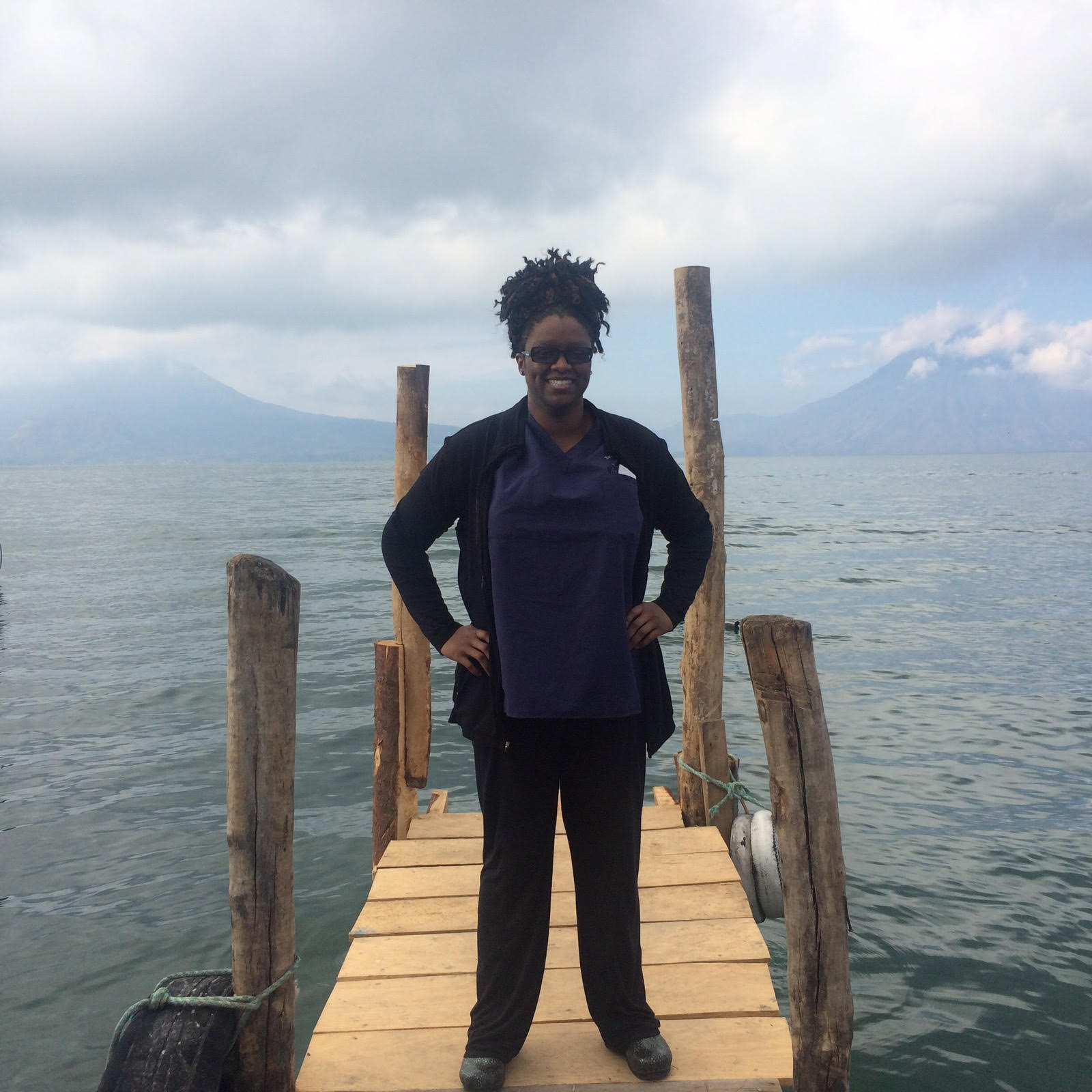
Xavier University ’10, B.A Spanish & B.S. Natural Science
Xavier University ’15, M.S. Nursing
University of Cincinnati College of Nursing, Ph.D. Candidate Nursing Research
Hometown: Tulsa, OK & Houston, TX
Life Motto: “1. Nobody cares about you as much as you care about yourself. When you are not okay you need to care about yourself. 2. You gotta roll with the punches.”
How has your upbringing shaped where you are today?
- “I was raised in an incredibly strict household. We got beat, we didn’t go play with friends, that wasn’t a thing. The school came first and foremost after God. The only time we played was organized sports and other than that we didn’t play, except with other African kids. I think that my upbringing has given me discipline and also has created the focus I have on the school. Also, has helped me to understand the world in a different way. I know that the American set of values is not the only set of values that are true and not the only set of values that work. So, I like to think I have a broader horizon that the run of the mill kids that are raised in America. But it does lead to a lot of cognitive dissonances when you have one foot in one country and one foot in the other. I will say that. My upbringing has festered a strong work ethic and high level of discipline. “
As an adolescence, we usually dream about the direction we would like our life to go, within our career paths, what was your dream during this time?
- “I wanted to be a medical doctor. In my early adolescence, I wanted to be an ice skater and a woman that plays in the NBA not the WNBA and a medical doctor. I thought I could do all three and I didn’t really understand that wasn’t a thing.”
Can you talk to me about specific instances that influenced you to diverge from the route that you were on? How did these instances lead you to your current situation?
- “So, I obviously wasn’t athletic enough to be an ice skater. You have to be a ballerina way to do that and I’m not. I also became ill, I was diagnosed with lupus in my early adolescence, so basketball was out of the picture because I couldn’t risk getting hit because of the higher risk of organ damage that could occur if I got hit or also just from playing. Lupus is a real health disease your organs & the heart doesn’t work the way they are supposed to. Playing a sport is dangerous when you have the level of disparity of disease that I have. That was the main reason I didn’t continue with sports into college actually. I played a lot of sports when I was growing up and I had to stop when I was advised it could be dangerous. It also meant I was in the hospital almost every week for the last 17 years. For something, at least for the first 10 years I was in the hospital for a long time, a lot of time. I spent a lot of time in the hospital studying and it just so happens I’m good with math and science, being exposed to the healthcare field kinda solidified I was going to pick one of the three goals I had in mind for my career.”
What is your definition of the grey area?
- “I have multiple types of grey areas that I operate in. Like I was saying, I don’t know what they call me, to guess I’m a second generation or first generation, I have no idea. I feel like everyone has different definitions. Something generational American, I’m an offspring of immigrants, that’s an identity grey area. Then the grey area you are referencing right now is for me, is the sensation of emptiness while doing things that are supposed to make you feel fulfilled. It like this sense of, I won’t say of complete nothingness, but it feels like you lack purpose because you are not where you think you should be. I think it’s the best way to put it, therefore you feel not hopeless, but you feel empty because you feel like you are doing what makes you not fulfilled in life.”
Why did you decide to go to college?
- “Because I was told, I didn’t decide. You know how most people sit with their parents and are like well, you are getting to be your junior year, senior year, tell us something you wanna do with your life after high school. Nope. that wasn’t a discussion, it wasn’t, like oh hey let’s think about your life after high school. No, you are going to college. We didn’t have money for it either, that’s the part that cracks me up, now that I look back, they knew they were sending us to college but did anybody save money? no! So who’s in debt now? But anyways, it was not my decision. I would say there no way I am where I wanted to be if couldn’t go to college. I’m not from a wealthy family, I don’t have millions of dollars saved. So I had to go to school, which I mean at the end of the day, I could have said no, but then I would have been out of the house.”
Post-graduation, what were your feelings and thoughts?
- “What the F just happened. I was the most emo kid ever. If I could have had white boy emo hair, I would have. I would have been Justin Bieber. I would have the head turn and everything. That’s literally how I felt, what the F just happened, at that point the whole plan was in the trash. That was a year after I graduated, a year after I had my ‘stem cell transplant’, that was not planned. I was so sick that year before I graduated, it was bad.”
How do you view college now?
- “I think it was a good growth opportunity. I think that if I had known about the debt thing I would have either dropped out of school and worked to get the money or find a cheaper school to go to, cause Xavier, lemme tell you, that school, those people looking for left and right kidneys out here.”
 Talk Grey To Me